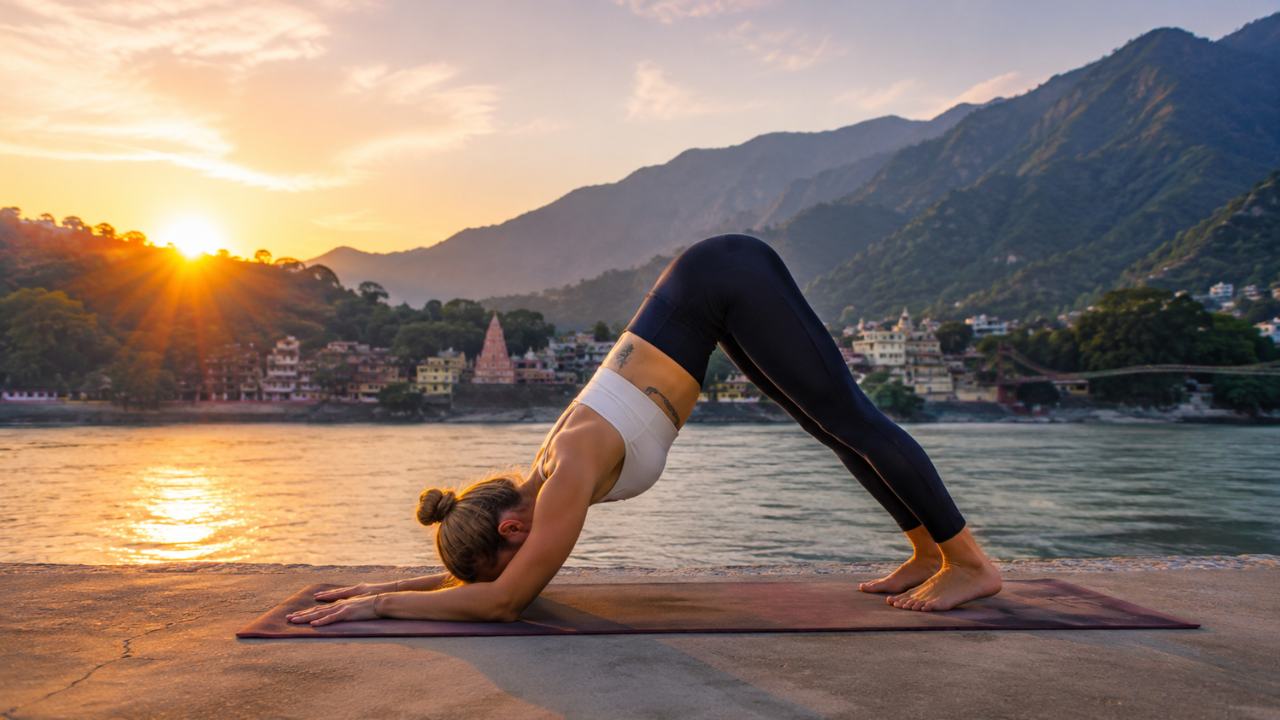
There is one yoga pose that looks simple — but does so much for your body. It opens your shoulders. It stretches your back. It builds strength in your arms and core. And it even helps you calm down after a long day. That pose is Dolphin Pose.
Dolphin Pose is known in Sanskrit as Ardha Pincha Mayurasana. It means "Half Feathered Peacock Pose." But everyone just calls it Dolphin Pose — and once you try it, you will understand why people love it so much. This 2026 guide gives you everything — the steps, the benefits, tips for beginners, and common mistakes to avoid.
What Is Dolphin Pose?
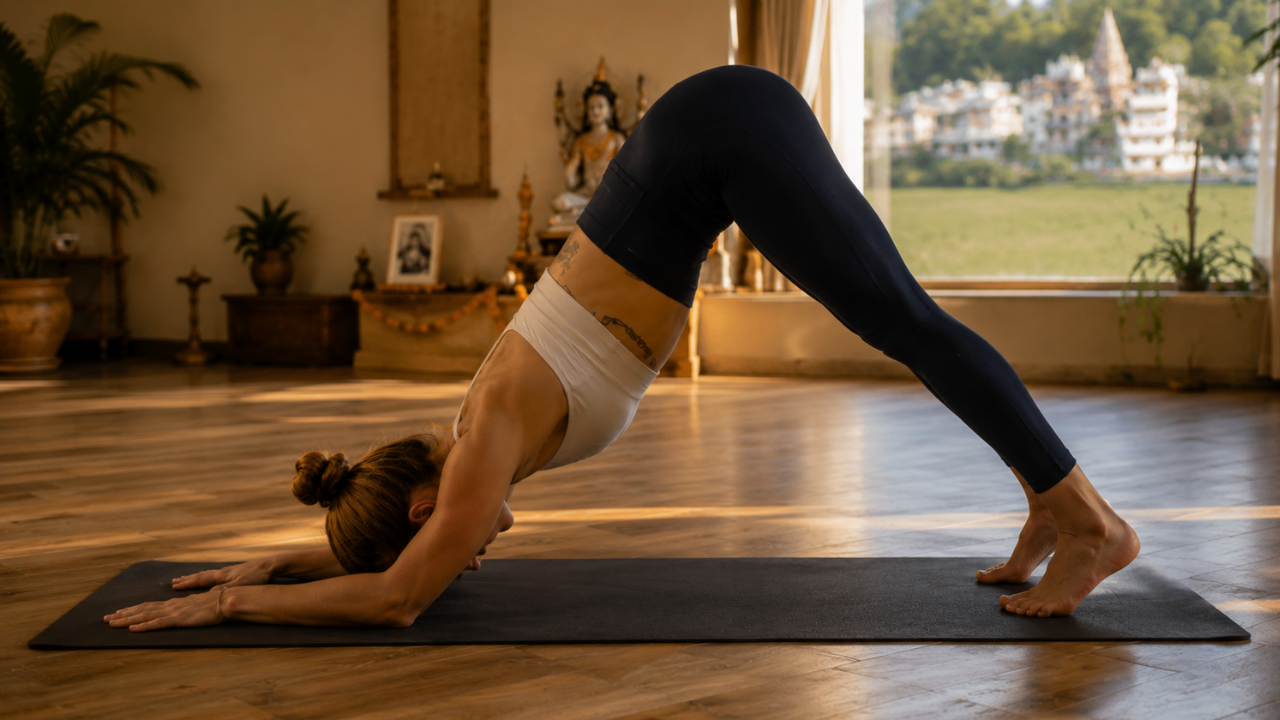
Dolphin Pose is a yoga asana where you rest on your forearms and push your hips up high. Your body makes a shape like an upside-down V. It is very similar to Downward Dog — but instead of your hands, your forearms are on the mat.
This small change makes a big difference. The pose works your shoulders much more. It also puts less pressure on your wrists. So if your wrists feel weak or sore in Downward Dog — Dolphin Pose is a great option for you.
- Sanskrit name: Ardha Pincha Mayurasana
- English name: Dolphin Pose
- Type: Inversion / Strength / Stretch
- Level: Beginner to Intermediate
- Hold time: 5 to 10 breaths (30 to 60 seconds)
- Good for: Shoulders, spine, hamstrings, core
How to Do Dolphin Pose – Step by Step
These steps are easy to follow — even if you are new to yoga. Go slowly. Do not rush. Feel each step in your body before moving to the next one.
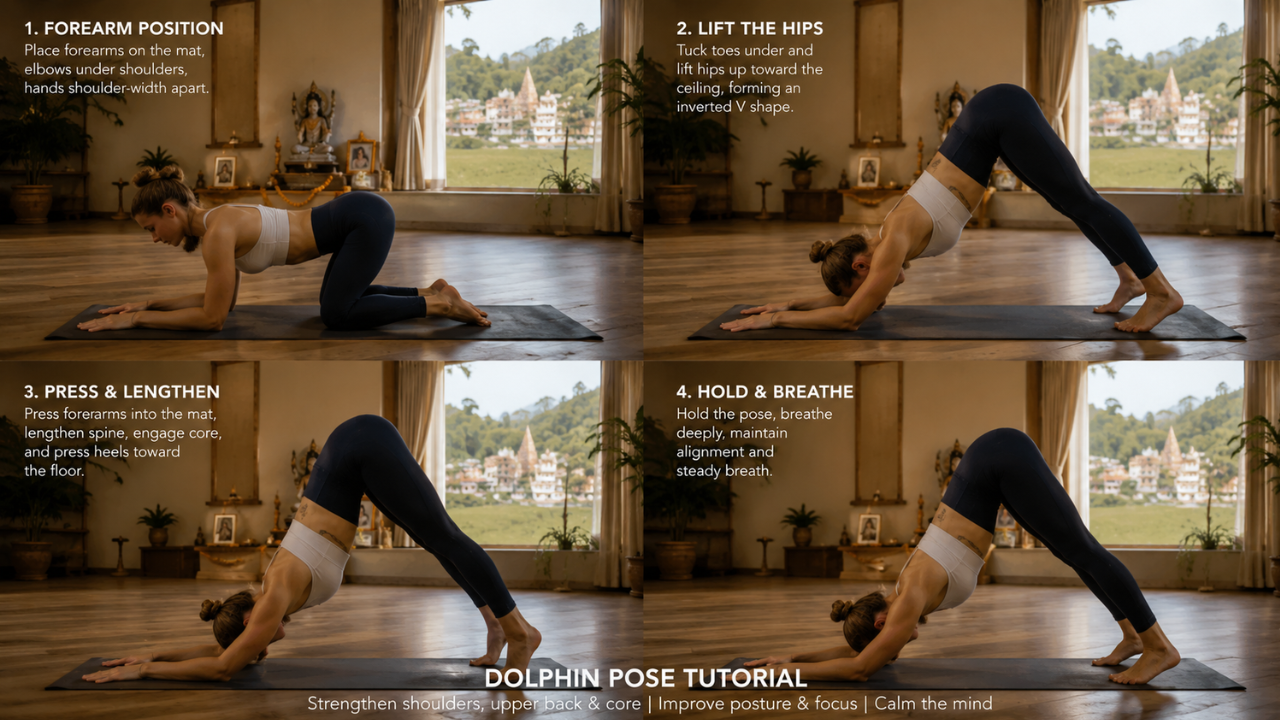
Step 1 – Start on All Fours
Come onto your hands and knees on the mat. Your knees should be right under your hips. Your wrists should be right under your shoulders. Take a breath here and settle in.
Step 2 – Lower Your Forearms
Bring your elbows down to the mat one at a time. Place them right where your hands were — so your elbows are directly under your shoulders. This is important. If your elbows are too wide or too narrow, the pose will feel wrong.
Step 3 – Set Your Hands
You have two options here. You can keep your palms flat on the mat with fingers spread wide. Or you can interlace your fingers and make a triangle shape with your arms. Both work well. Try both and see which one feels more stable for you.
Step 4 – Tuck Your Toes and Lift Your Hips
Tuck your toes under. On your next exhale — lift your hips up and back. Press your hips up toward the ceiling. Your body will start to look like an upside-down V. Keep your forearms pressed firmly into the mat as you lift.
Step 5 – Straighten Your Legs
Try to straighten your legs. Press your heels down toward the mat — but it is okay if they do not touch the floor. If your hamstrings are tight, keep a soft bend in the knees. That is perfectly fine for beginners.
Step 6 – Relax Your Head
Let your head hang freely between your upper arms. Do not hold tension in your neck. Your ears should be in line with your upper arms — not dropping below them. Breathe slowly and hold for 5 to 10 breaths.
Step 7 – Come Out Slowly
To come out — bend your knees and gently lower them back to the mat. Come into Child's Pose and rest for a few breaths. This helps your body reset after the effort.
Top Benefits of Dolphin Pose
Dolphin Pose is one of those poses that gives you a lot for the effort you put in. Here are the key benefits — and why this pose is worth adding to your daily practice.
1. Builds Strong Shoulders
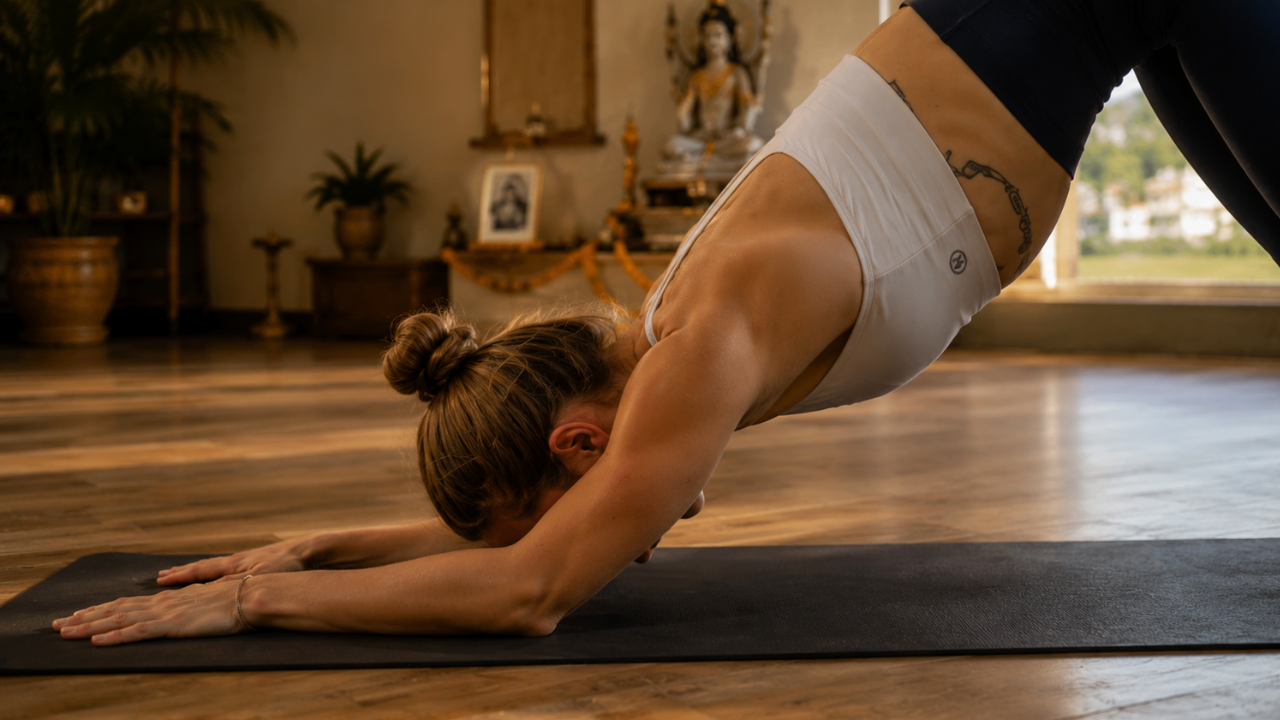
When you hold Dolphin Pose, your shoulders work hard to keep you stable. Over time, this builds real strength in your shoulder muscles. Strong shoulders also help with posture — especially if you sit at a desk all day.
2. Stretches Your Hamstrings and Calves
As you push your hips up and press your heels down, you get a deep stretch along the back of your legs. Most people carry a lot of tightness in their hamstrings — and Dolphin Pose works on that directly.
3. Strengthens Your Core
Holding the pose requires your core to stay engaged the whole time. You will feel your belly working. This is great for people who want a stronger core without doing endless crunches.
4. Opens the Chest and Upper Back
As you push your hips back and press your chest toward your thighs, the upper back opens up. This is very helpful for people who hunch forward at a computer. Dolphin Pose naturally pulls the shoulders back and opens the front of the chest.
5. Calms the Mind
Dolphin Pose is a mild inversion — your head is below your heart. This naturally calms the nervous system. Many people feel quieter and more relaxed after holding this pose for even just one minute. It is great for stress and anxiety.
6. Prepares You for Headstand
Dolphin Pose is one of the best poses to practice before attempting Headstand or Forearm Balance. It builds the exact shoulder and core strength you need. If Headstand is your goal — make Dolphin Pose a regular part of your practice.
7. Good for Wrist Problems
Because your weight is on your forearms — not your hands — this pose is friendly for people who have weak or sore wrists. It gives you all the benefits of an inversion and shoulder opener without loading the wrist joint.
- Muscles worked: Deltoids, triceps, core, hamstrings, calves, upper back
- Improves: Posture, balance, flexibility, shoulder mobility
- Relieves: Stress, anxiety, back tension, neck stiffness
- Prepares for: Headstand (Sirsasana), Forearm Balance (Pincha Mayurasana)
Common Mistakes in Dolphin Pose
These are the mistakes that most beginners make. Knowing them before you start will save you a lot of struggle — and help you get the full benefit of the pose.
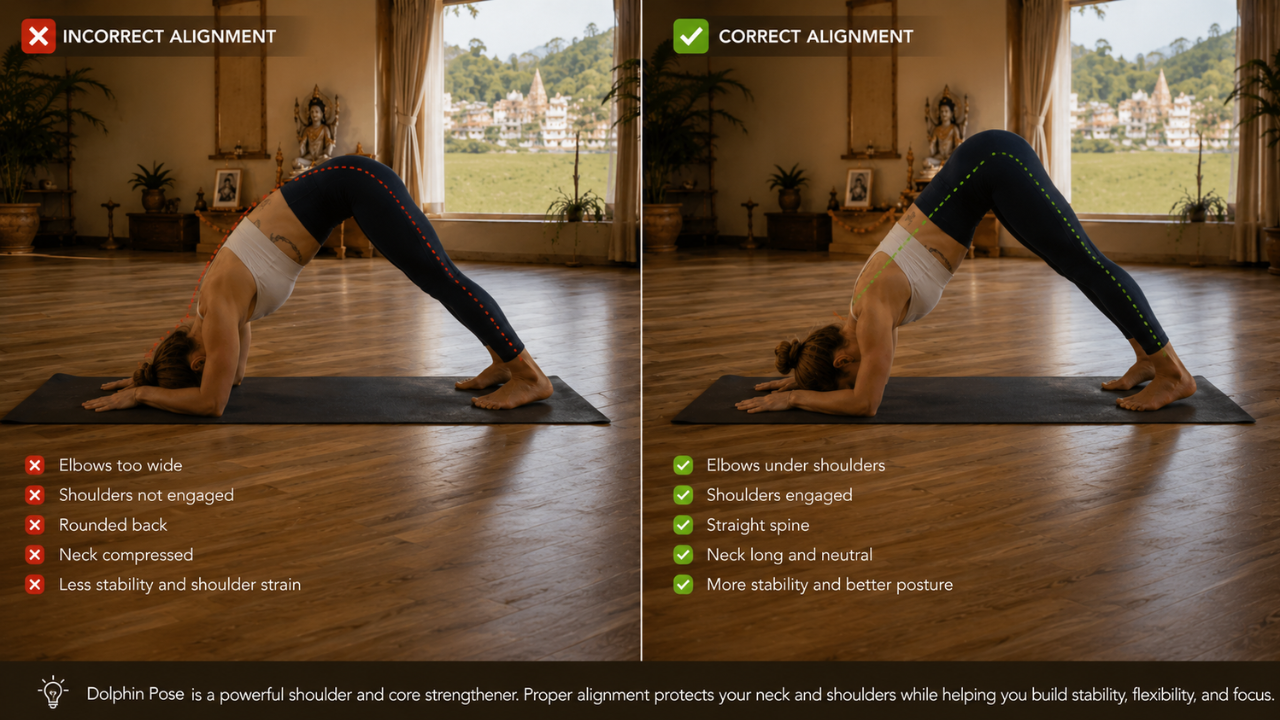
Mistake 1 – Elbows Too Wide
This is the most common mistake. When your elbows slide out wider than your shoulders, the pose loses its stability. Your weight ends up in the wrong place. Fix: Place a block between your hands or use a strap around your upper arms to keep elbows in place.
Mistake 2 – Collapsing the Chest
Some people let their chest drop toward the floor instead of pushing it back toward the thighs. This puts pressure on the neck and removes the shoulder stretch. Fix: Think of pushing the mat away with your forearms and lifting your hips higher.
Mistake 3 – Holding the Breath
Many beginners hold their breath in this pose because it feels like hard work. This is normal — but it makes the pose much harder. Fix: Keep breathing slowly and steadily. Inhale through the nose, exhale through the nose. Breath is what keeps you stable.
Mistake 4 – Rounding the Upper Back
When the back rounds too much, the pose becomes a passive hang instead of an active stretch. Fix: Engage your core, lengthen your spine, and press your tailbone up toward the ceiling. The spine should feel long — not curved.
Mistake 5 – Forcing Straight Legs
Many beginners try to force straight legs even when their hamstrings are very tight. This causes the lower back to round. Fix: Keep a soft bend in the knees until your hamstrings open up over time. Straight legs will come — do not rush them.
Tips for Beginners – Make It Easier
Dolphin Pose can feel hard the first time. That is okay. These simple tips will make the pose more comfortable — and help you hold it longer without strain.
- Bend your knees: If hamstrings are tight, always keep a soft bend in the knees. Focus on lifting your hips — not straightening your legs.
- Use a yoga block: Place a block between your palms or under your forehead for support in the beginning.
- Use a strap: Loop a strap around your upper arms to stop the elbows from sliding out. This keeps alignment perfect.
- Start with short holds: Begin with 3 to 5 breaths and build up slowly to 10 breaths. No need to hold longer than that in the beginning.
- Warm up first: Do Cat-Cow and Child's Pose before Dolphin. Warming up the spine makes the pose much more comfortable.
- Rest in Child's Pose after: Always take a few breaths in Child's Pose after Dolphin. This releases the shoulders and lets the body recover.
How Long Should You Hold Dolphin Pose?
For beginners, hold Dolphin Pose for 5 breaths — which is about 30 seconds. As you get stronger, work up to 10 breaths or about 60 seconds. You can also do 2 to 3 rounds in one session with rest between each round.
Dolphin Pose Modifications for All Levels
Every body is different. These modifications help you get the most out of Dolphin Pose — whether you are a complete beginner or want a bigger challenge.
For Beginners – Bent Knee Dolphin
Keep both knees bent throughout the pose. Focus only on lifting your hips high and pressing your forearms into the mat. This takes the tension off tight hamstrings and lets you work on shoulder strength first.
For Tight Shoulders – Use a Block
If your shoulders are very tight, place a yoga block under your forehead. This gives you something to rest on lightly — and removes the feeling of "falling forward." It makes the pose much more relaxing.
For Advanced Practitioners – Walking the Feet In
Once you feel strong in the pose, try slowly walking your feet in toward your elbows. This increases the shoulder load and gets you closer to Forearm Balance. Stop when you can no longer keep your hips up.
Dolphin Pose vs Downward Dog – What's the Difference?
- Base: Dolphin = forearms on mat. Downward Dog = hands on mat.
- Wrist load: Dolphin Pose is much gentler on the wrists.
- Shoulder work: Dolphin Pose works the shoulders much more.
- Inversion prep: Dolphin is better for headstand and forearm balance.
- Which is better? Both are great — use Dolphin when wrists are sore or when training for inversions.
Who Should Be Careful with Dolphin Pose
Dolphin Pose is safe for most people. But there are a few cases where you should be careful or avoid it.
- Shoulder injury: If you have a rotator cuff injury or shoulder inflammation — skip this pose and talk to your doctor first.
- Neck problems: If you have a cervical spine issue, do not let the head drop freely. Keep the neck in a neutral position and move slowly.
- High blood pressure: As a mild inversion, Dolphin Pose may not be suitable. Consult your doctor before trying any inversion.
- During menstruation: Some teachers advise avoiding inversions during heavy flow days. Listen to your body and rest if needed.
- Osteoporosis: People with bone density issues should be careful with weight-bearing poses. Ask a yoga teacher for a safe alternative.
When in doubt — always ask a qualified yoga teacher before trying any new pose. A good teacher can show you the right version of the pose for your body.
How to Add Dolphin Pose to Your Daily Yoga
Dolphin Pose works well in many parts of a yoga session. Here is how to use it smartly depending on your goal.
- As a warm-up: Hold for 3 to 5 breaths in the beginning of practice to open the shoulders and wake up the core.
- As a standing sequence flow: Move from Plank to Dolphin Pose and back — repeating 5 times. This builds heat and strength quickly.
- As inversion prep: Do 3 rounds of Dolphin Pose before attempting Headstand or Forearm Balance.
- As a cool-down: Hold for 8 to 10 breaths with eyes closed and full slow breathing. It calms the nervous system.
- How many times per week: 3 to 5 times a week is enough to see real improvement in shoulder strength and hamstring flexibility.
Learn Dolphin Pose at a Yoga Retreat in Rishikesh
Reading about Dolphin Pose is one thing. Practising it with a teacher who can correct your alignment in real time — that is where the real progress happens.
At Adishesh Yoga in Rishikesh, we teach Dolphin Pose as part of our yoga retreats and yoga teacher training programs. Our classes are small, the teachers are experienced, and the setting — right beside the Ganges — makes your practice something special.
- Daily asana classes: Practice Dolphin Pose and other key asanas with proper alignment guidance
- Inversion workshops: Learn the path from Dolphin Pose to Forearm Balance and Headstand safely
- Pranayama and meditation: Complement your physical practice with breathwork and stillness
- Small groups: Get personal attention and corrections in every class
Frequently Asked Questions
Conclusion
Dolphin Pose is one of those yoga poses that seems simple — but gives you so much. Strong shoulders. Open hamstrings. A calm mind. Better posture. And the foundation for bigger inversions down the road.
You do not have to be flexible to start. You do not have to be strong to begin. You just need to get on the mat and try it. Start with bent knees. Hold for a few breaths. Come back to it every day. In a few weeks, you will be amazed at how much has changed.
If you want to deepen your yoga practice in a beautiful setting — come join us at Adishesh Yoga in Rishikesh. We will help you build poses like Dolphin the right way — with good alignment, good breath, and good energy around you.